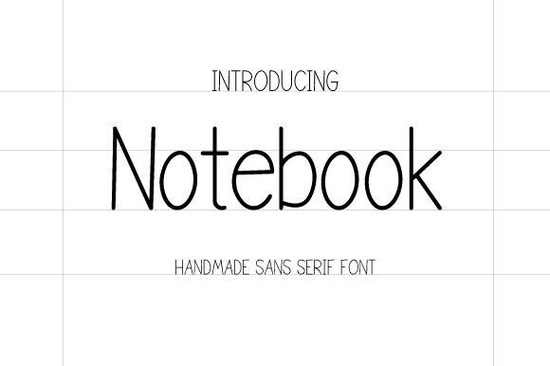
If you're looking for a clean, legible sans serif font that still feels personal and handmade like something written with care in a well-loved notebook you’ll appreciate Notebook Font. It’s not overly decorative or fussy, but it carries warmth and quiet confidence. Designed with real-world use in mind, it works just as well on a printed business card as it does in a Procreate sketch or a digital invitation.
Who is Notebook Font actually good for?
This isn’t a one-size-fits-all display font meant only for headlines. Its balanced letterforms and open spacing make it practical for longer text think product labels, small-batch packaging, workshop handouts, or even internal team documents where clarity matters. Because it’s handmade (but not overly rough or inconsistent), it bridges the gap between approachable and professional.
Small business owners who design their own social graphics or email headers often struggle to find fonts that feel human without sacrificing readability. Notebook Font solves that quietly it doesn’t shout, but it holds attention. Crafters using Cricut or Silhouette machines also like how cleanly it cuts at medium sizes, especially when layered over textured backgrounds.
What makes it different from other “handwritten” sans serifs?
Many fonts labeled “handwritten” lean too far into script or mimic shaky pen strokes great for mood, less ideal for branding consistency. Notebook Font keeps the softness of hand-drawn shapes but grounds them in steady rhythm and even weight distribution. There’s no forced wobble, no exaggerated terminals. Just honest, calm lettering like notes you’d take during a thoughtful planning session.
It includes both TTF and OTF files, so whether you’re working in Canva, Adobe Illustrator, Affinity Designer, or even Microsoft Word, you’ll have reliable access. And because it’s a sans serif, it pairs easily with serif companions (like a classic serif for body copy) or stands alone confidently in minimalist layouts.
How does it fit with other popular Creative Fabrica fonts?
If you already use Nunito Sans for clean UI work or client-facing web content, Notebook Font adds a quieter, more tactile alternative for print or personal branding. For contrast, Godplan Font brings bolder energy and modern flair ideal for logos or posters while Notebook Font serves better for supporting text or gentle emphasis. And if you love the organic flow of Moon Walk Font, you’ll recognize a similar handmade intention here but with tighter spacing and more consistent x-height, making it easier to read at smaller sizes.
You’ll also find it fits naturally alongside seasonal or thematic collections: it’s been used in autumn-themed stationery (without leaning into cliché “fall” motifs), back-to-school planners (where legibility beats trendiness), and even subtle luxury packaging because its restraint reads as intentional, not plain.
Where do people actually use it?
- Print-on-demand sellers use it for notebook covers, greeting cards, and wall art especially when they want a cohesive, hand-crafted look across multiple products.
- Teachers and educators choose it for editable worksheets and classroom signage it’s clear enough for young readers but warm enough to avoid sterile textbook vibes.
- Fashion and lifestyle brands apply it to fabric tags, hang tags, and Instagram story text overlays where tone matters as much as typography.
- Hobbyists in Procreate layer it over watercolor brushes or scanned paper textures it holds up well without competing visually.
One thing users consistently mention: it prints cleanly at 10–12 pt. That’s rare among fonts marketed as “handmade.” You won’t get fuzzy edges or unintended gaps in letters like “e” or “a” a small detail that saves time and ink.
If you're curious about similar options, Notebook Font is part of a thoughtful family of accessible, well-drawn typefaces not just another download-and-forget file.
Before you install it, try this quick test:
- Open a blank document and type a short sentence in 14 pt size.
- Print it or zoom to 200% on screen and check spacing between letters like “r” and “n”, or “a” and “v”.
- Compare it side-by-side with Nunito Sans or Godplan Font: does it feel distinct but still usable in your workflow?
- If yes, add it to your next project draft and see if it quietly improves how your message lands.
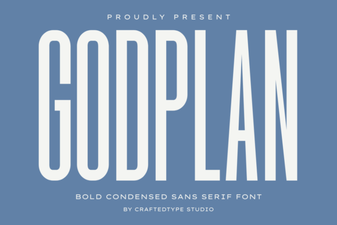 Godplan Font: Creative Typography for Modern Projects
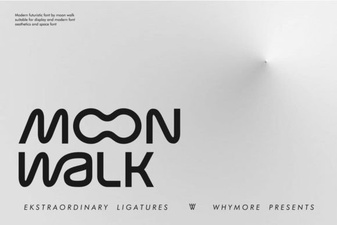 Moon Walk Font: Where Design Takes Flight
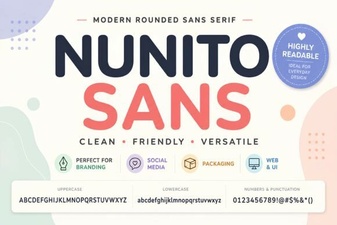 Nunito Sans: a Modern Font for Web Design
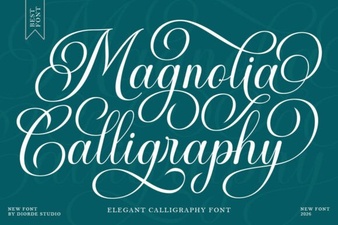 Magnolia Calligraphy Font for Elegant Design Projects
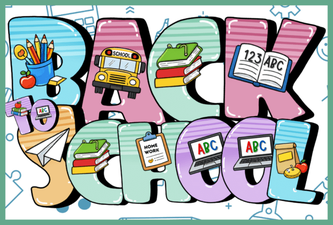 Creative Back to School Fonts for Classroom Projects
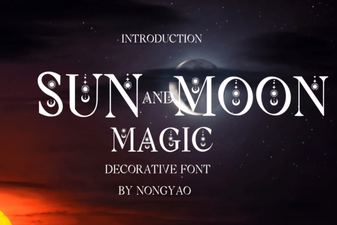 Craft Typography with Sun & Moon Symbol Magic